LegitMov — AMR receiver (active walk-by / drive-by)
Sometimes the network isn't the answer. LegitMov is.
Meters behind fences, spread across districts with no fixed network. LegitMov reads them anyway — on foot or by route.
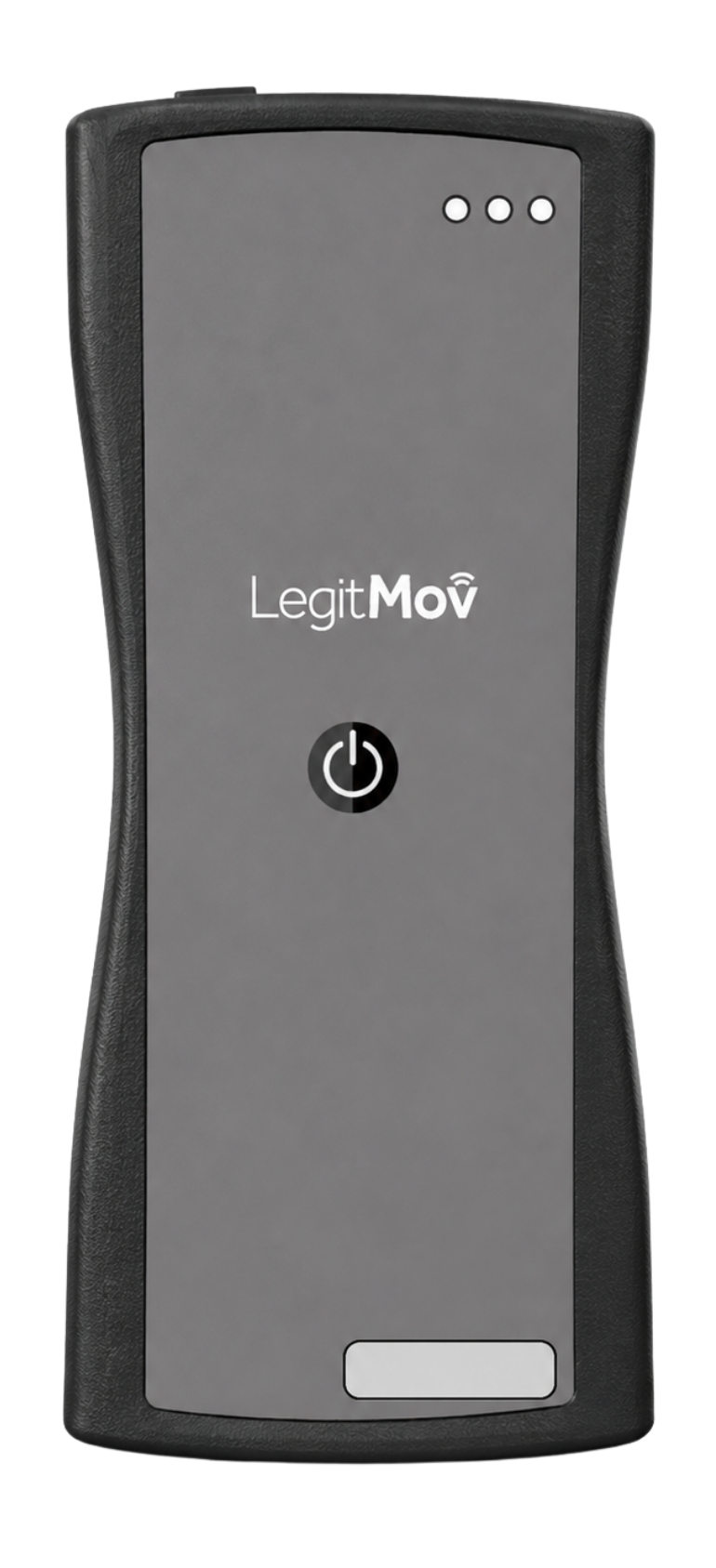
Meters behind fences, spread across districts with no fixed network. LegitMov reads them anyway — on foot or by route.
The market treats this like a two-option problem: build out AMI — LoRaWAN/Mioty gateways, an NB-IoT deal with a carrier — or keep sending someone to read the meter by hand. Neither fits a lot of localities: no AMI infrastructure today, little chance of it arriving for years if ever, and visual reads that are slow, expensive, and getting worse. There's a third option: meters already broadcast on their own, no network required, and LegitMov just needs to get close enough to catch it.
The meter behind the side gate hasn't been read in three cycles. The one in the pump room basement gets estimated every time. Every unread meter gets billed by average — expensive for whoever's collecting, unfair to whoever's actually using less than that. LegitMov solves both at once: no network to reach it, no gate to unlock — just get within range.
The telegram exists — every few seconds, on the meter's own schedule — but without a listener nearby, it's just RF in the room. No history, no alerts, no read.
LegitMov receives and decodes the full telegram the moment it's in range, then syncs the computed reading to LegitField over Bluetooth — no fixed installation required to get the read.
Different title, different reason — same result: the read doesn't happen.
LegitMov reads the meter anyway — no fixed network to build, no fence to climb. In a single building or dense site, one LegitFix concentrator already covers every meter in real time — the better fit once density earns it. LegitMov is for meters that are either too spread out for that, or just too awkward to reach any other way.
| Constraint | Manual reading | AMR — active drive-by (LegitMov) | AMI fixed network |
|---|---|---|---|
| Field visit required | Yes — every cycle, meter by meter | Yes — a route, not a per-meter stop | No — no visit after install |
| Data latency | As slow as the reading cycle | Same-day, on the route's schedule | Real-time |
| Network infrastructure | None | None | Concentrators or LPWAN gateways required |
| Rollout cost | Lowest capex, highest ongoing labor cost | Low — reuses existing routes or adds one | Highest — infrastructure plus integration |
| Meter access needed | Open the box or enclosure, every time | None — reads the native radio broadcast in passing | None |
| Best fit | Small, low-value meter populations | Spread-out populations a fixed network can't reach — yet or ever — and meters a visual crew can't easily get to | Dense populations already served by reliable connectivity |
LegitMov syncs through LegitField to LegitOS by default. If the utility, HOA, or submetering operator already runs an MDM, a billing system, or an internal dashboard, the same readings reach it via API or webhook instead — one more input, not a system to migrate to.
Whether on foot or in a vehicle, the operator carrying LegitMov moves through a scheduled route; compatible meters within ~500 m keep broadcasting on their own native schedule as they come into range.
The receiver decrypts and computes the reading on the spot — the same decoding engine as LegitFix, packaged for the field.
Readings sync to the LegitField app over Bluetooth, then reach LegitOS — or your own system via API/webhook — whenever the phone has connectivity. Pricing rules turn it into an invoice, same as any other read.
Most meter manufacturers build to the same open application layer — OMS/wM-Bus — on the same frequency. LegitMov decodes that shared frame regardless of which brand sent it, so a mixed fleet reads through one receiver instead of one reader per manufacturer.
| Enclosure | Reinforced polycarbonate, German-engineered — optional rubber bumper for extended service life on request |
| Dimensions | 150 × 75 × 25 mm (H × L × W) |
| Indicators | 5 status LEDs — power source, charge status, powered on, Bluetooth connection, firmware update mode |
| Data layer | OMS-compliant (EN 13757-3) |
| Radio — 433/434 MHz | Wireless M-Bus, the OMS-specified band for markets outside Europe: Brazil, Australia, and the Middle East |
| Radio — 868 MHz | Europe — the wM-Bus/OMS standard band, same EN 13757-3 frame and application layer |
| Radio — 902–928 MHz | North America — 915 MHz nominal |
| Radio — 2.4 GHz (BLE) | Some meters broadcast via Bluetooth Low Energy instead of wireless M-Bus — LegitMov reads both natively |
| Phone pairing | Bluetooth to the LegitField app |
| Payload | Encrypted; decrypted and computed locally by LegitMov |
| Transmission logic | On-demand — reads any compatible meter as it comes into range during a pass |
| Capacity | Unlimited meters per pass — no per-unit cap, unlike a fixed concentrator |
| Range | Up to 500 m from the meter |
| Autonomy | 10 hours continuous operation |
| Charging | 5-hour fast charge, power supply included |
| Compatibility | Any OMS-compliant wM-Bus meter, regardless of manufacturer |
| Companion app | LegitField |
| Data delivery | LegitOS (default), or API / webhook to an existing platform |
No. The same math shows up on three different desks: a submetering partner deciding whether a scattered client is worth the contract, a utility engineer covering a district too small for a fixed network, and an HOA treasurer trying to stop billing everyone by average. Wherever a meter population is spread out and a route already exists — or could — LegitMov fits.
Because that only works if nobody in the vehicle has to do anything. LegitFix is fully autonomous — it streams over 4G with no phone or app involved, so it can ride along in a truck that's already out for another job, like waste collection or street lighting maintenance. LegitMov pairs to an operator's phone through LegitField, which needs someone actively managing the route — the right fit when reading meters is the point of the trip, not an afterthought in someone else's.
Not necessarily. Some territories will eventually get one, and LegitMov works fine as the step before that. Many others won't — the economics or the physical access rule it out — and for those, this is the permanent way those meters get read, not a placeholder for something else.
No. Readings sync to LegitField by default and can reach LegitOS, or be delivered to an existing platform via API or webhook.
Any meter that transmits OMS-compliant wM-Bus telegrams — the same open protocol layer LegitFix reads in a fixed install. A fleet mixing several brands still reads through the one receiver, with no manufacturer-specific integration needed.
A single LegitFix concentrator reads every meter in a building continuously and in real time — usually the better fit once a site is dense enough to justify a fixed install. LegitMov is built for the meters that are too spread out for that math to work.